Why Cash-on-Delivery Fraud in Pakistan Often Starts With a Fake or Vague Address
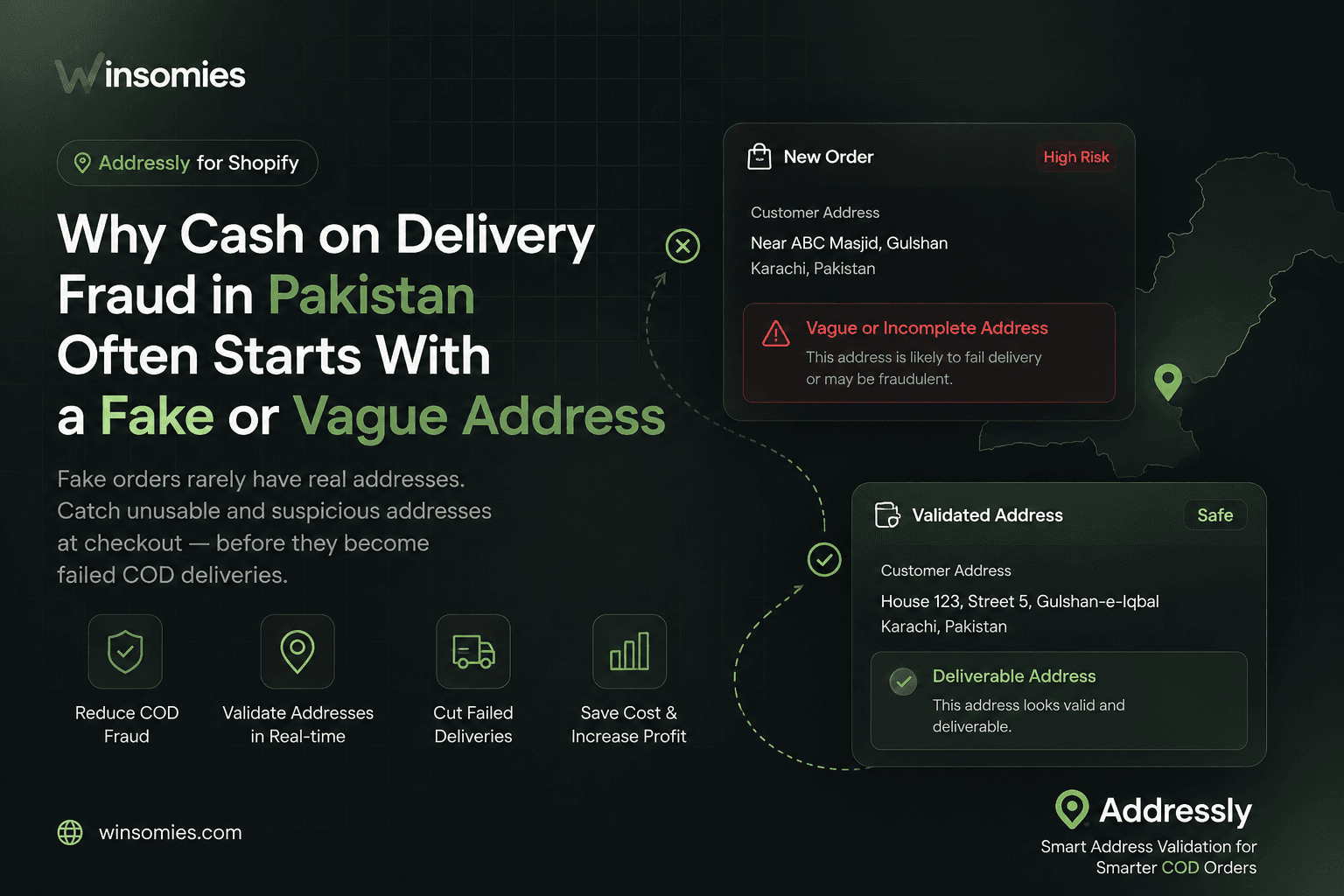
COD return-to-origin rates of 20-45% aren't random. Learn why fake or vague addresses are the earliest warning sign of Cash-on-Delivery fraud on Pakistani and Gulf Shopify stores, and how to catch it before dispatch.
Why Cash-on-Delivery Fraud in Pakistan Often Starts With a Fake or Vague Address
If you run a Shopify store in Pakistan and rely on Cash on Delivery, you already know the numbers can be brutal. Estimates vary depending on who's reporting, but courier and logistics sources commonly put COD return-to-origin rates somewhere between 20% and 45%. Dig into why so many of these orders get rejected, refused, or turn out to be fraudulent, and one thread keeps showing up: the address was never real to begin with.
Most merchants treat address problems and fraud problems as two separate things. They usually aren't. In a COD-heavy market like Pakistan's, a bad address is often the first sign of a fraudulent or low-intent order — and catching it at checkout is a lot cheaper than catching it after the courier has already made the trip.
The Pattern: Fake Orders Rarely Have Real Addresses
Think about how a fraudulent or prank COD order actually gets placed. The buyer isn't planning to pay, isn't planning to be home, or is just testing whether your store checks anything at all. So they take the easiest route:
- A vague area name with no house number ("Gulshan, Karachi")
- A landmark with zero street detail ("near XYZ Masjid")
- A copy-pasted address from a completely different city
- Gibberish or placeholder text, just enough to get past a required field
- A phone number that doesn't match the stated city or area code
None of this is accidental. A real customer who wants their package to arrive usually writes a usable address, because they want the delivery to succeed. A fraudulent or non-serious buyer has no reason to bother, so the address field turns into an afterthought — filled in just to submit the form.
Here's what that looks like in practice: an order comes in for "Gulshan, Karachi," no house number, no landmark, and a phone number registered to a different city code. The rider spends twenty minutes calling a number that never picks up, drives around the general area, and eventually turns back. On your dashboard, that shows up as one failed delivery. What it actually was is an address that was never going to work — caught too late to matter.
This is why address quality is one of the strongest, and most overlooked, early fraud signals available to Shopify merchants in Pakistan and the Gulf.
Why COD Fraud Is Especially Common in Pakistan
Standard Shopify checkout fields were built for address systems with postal codes, house numbers, and street names that map cleanly onto a database. Pakistan's addressing reality doesn't work that way:
- Many areas rely on mohalla names, landmarks, and verbal directions instead of formal street addresses
- Postal codes are often skipped, unknown, or entered wrong
- The same area name can exist in more than one city
- Riders frequently end up calling customers just to find them, which means the written address was never really functional in the first place
Because the system already tolerates vague addresses for legitimate reasons, fraudulent or low-intent orders can hide in plain sight. A fake address doesn't stand out, because even real addresses are often incomplete too. That's the actual problem: your checkout can't currently tell the difference between a genuine customer with a messy address and a fraudulent order with a fake one, because both look about the same.
What High COD Rejection Rates Actually Cost You
Every order with an unusable address doesn't just quietly disappear. It costs you:
- Courier dispatch fees for a delivery that was never going to succeed
- Rider time spent calling, searching, or re-routing
- Reverse logistics costs when the package gets sent back
- Support hours chasing confirmation on orders that were never real to begin with
- Inventory tied up in transit — stock that could've gone to an actual buyer
For a store running hundreds of COD orders a month, even a modest share of these being fraud-adjacent or fake adds up to a real, recurring drain. It doesn't show up as one clean line item, which is exactly why it's easy to underestimate.
The Fix Isn't More Fields — It's Checking What's Already There
A common response is to add more required fields: postal code, landmark, house number, alternate phone. In practice, this backfires. Genuine customers get annoyed by the extra friction and abandon checkout, while fraudulent orders just type garbage into the new fields too. More fields without any checking just means more junk data.
What actually helps is validating the address as it's typed in, checking things like:
- Whether the area and city combination is real and consistent
- Whether the address has enough detail to actually be deliverable, not just a bare landmark
- Whether the phone number's area code matches the stated location
- Whether the pattern matches other addresses that have failed or been flagged before
This is the gap Addressly is built to close. Instead of adding friction for real customers, it flags the address patterns that tend to show up in failed or fraudulent COD orders — in real time, before the order even reaches your fulfillment queue.
Address Quality Is a Fraud Signal, Not Just a Delivery Detail
Most fraud-prevention tools in e-commerce focus on payment risk, IP checks, or order velocity. In a COD-heavy market, those matter less, because there's no payment step to protect in the first place. The address is the highest-signal data point you have at checkout, and right now, most Shopify stores in Pakistan aren't using it that way.
If you're seeing high COD rejection rates, it's worth looking past "how do we reduce failed deliveries" and asking how many of these are failing simply because the address was never real. That shifts where you look for the fix — from courier performance and rider incentives, to what's actually happening at your checkout form.
Stop Fake COD Orders Before They Leave Your Warehouse
You don't need to overhaul your checkout or add friction for genuine buyers. You need a way to catch unusable and suspicious addresses the moment they're entered — before the order gets confirmed, before a courier is dispatched, and before it turns into a return-to-origin cost.
That's what Addressly does for Shopify stores in Pakistan and the Gulf. It flags vague, incomplete, or landmark-only addresses in real time at checkout, cross-checks city, area, and phone number consistency, and works quietly in the background with no extra steps for real customers — so you end up with fewer failed COD deliveries and lower reverse logistics costs.
Install Addressly from the Shopify App Store →
Setup takes a few minutes, and most stores start seeing cleaner, more deliverable COD orders within the first week.